

Serama Chickens
The world's smallest chickens

I know, I know…I said I wouldn’t have chickens. After a busy year hatching out a few rounds of birds again with my local high school students, my son asked if we could hatch quail. That is definitely not something I want to tackle based on quail’s attributes, so we compromised by hatching Serama chicken eggs. ‘But Mom, you said chickens were dangerous to have with your turkeys?’ Originally, I thought so, too, so more research was warranted into Blackhead disease and its effects on chickens and turkeys together. I came to a few new conclusions, mainly that this disease was a real problem for large producers that moved turkeys into warehouses previously used for chickens (large amounts of any animal in small spaces standing in feces leads to a host of diseases and issues anyway). I know a lot of people that keep chickens and turkeys together in a backyard flock setup without problems. My turkeys are required to free range all day as much as possible and are therefore exposed to lots of things good and bad, that actually contribute to their health. As they walk along in the sunshine, they eat any number of bugs and plants (along with their pellets and scratch and plenty of snacks that happen to fall off my back porch) including some earthworms that carry the Blackhead parasite, if they can beat my ducks to the worms (not likely). I also do regular maintenance deworming with Safeguard (when my girls aren’t laying eggs) using my patented Grape deworming system [I’ll make a post about this soon]. Not specific to my turkeys, but to the Seramas I planned on having was that their small size prevents them from free ranging safely on my property.
I found some fertile Serama eggs from a very knowledgeable local breeder:
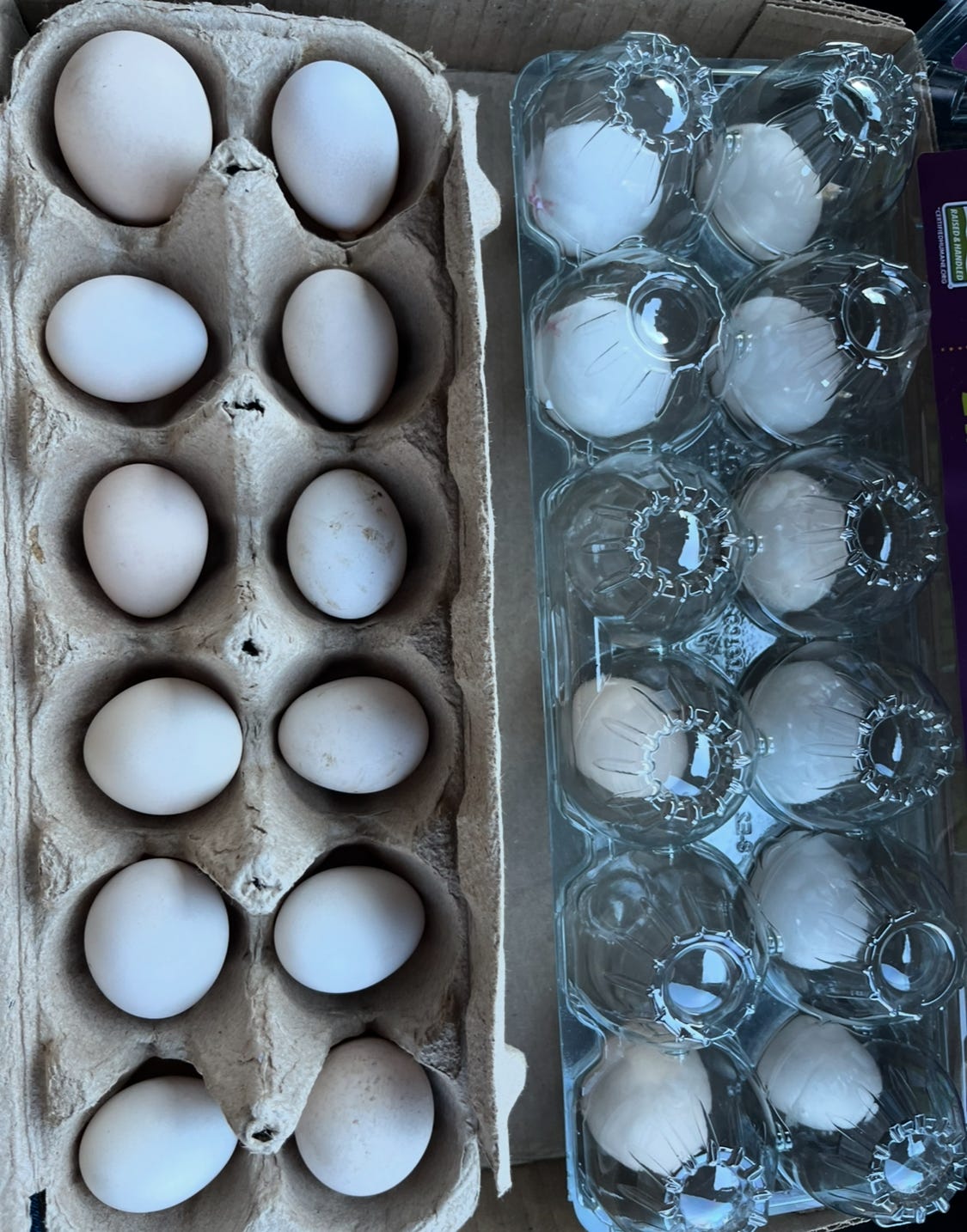
He advised me that Seramas have notably low fertility rates and gave me the freshest eggs and several pointers to help them incubate properly. I had already researched their background: mixed bantams contributed to these little guys in Malaysia, with several body ‘types’ like from Malaysia, or the US type from imported birds. Seramas come in all color patterns, but for showing purposes, the APA only accepts White while the Bantam shows allow for a few more colors.
Another small[est] chicken is the Kikiriki from Puerto Rico (its name is the phonetic sound of a teeny rooster crow in Spanish). This isn’t a breed per se, just very small chickens that don’t necessarily have the distinguishing Serama traits, mainly their upright ‘confident’ stance and differences in feet length. Kikirikis can also vary in size more than Seramas, from micro to average. Some Seramas carry silkie or frizzle feather genes from the bantams that contributed to their genetics, but I didn’t want to dabble with those genes or particularly like the appearance. Seramas can also be crossbred with Naked Neck genes, but even though I like the Naked Neck attributes in regular sized chickens, none of my family members like the look.
That first batch of 22 eggs had 13 that started developing, but only 6 of those hatched.


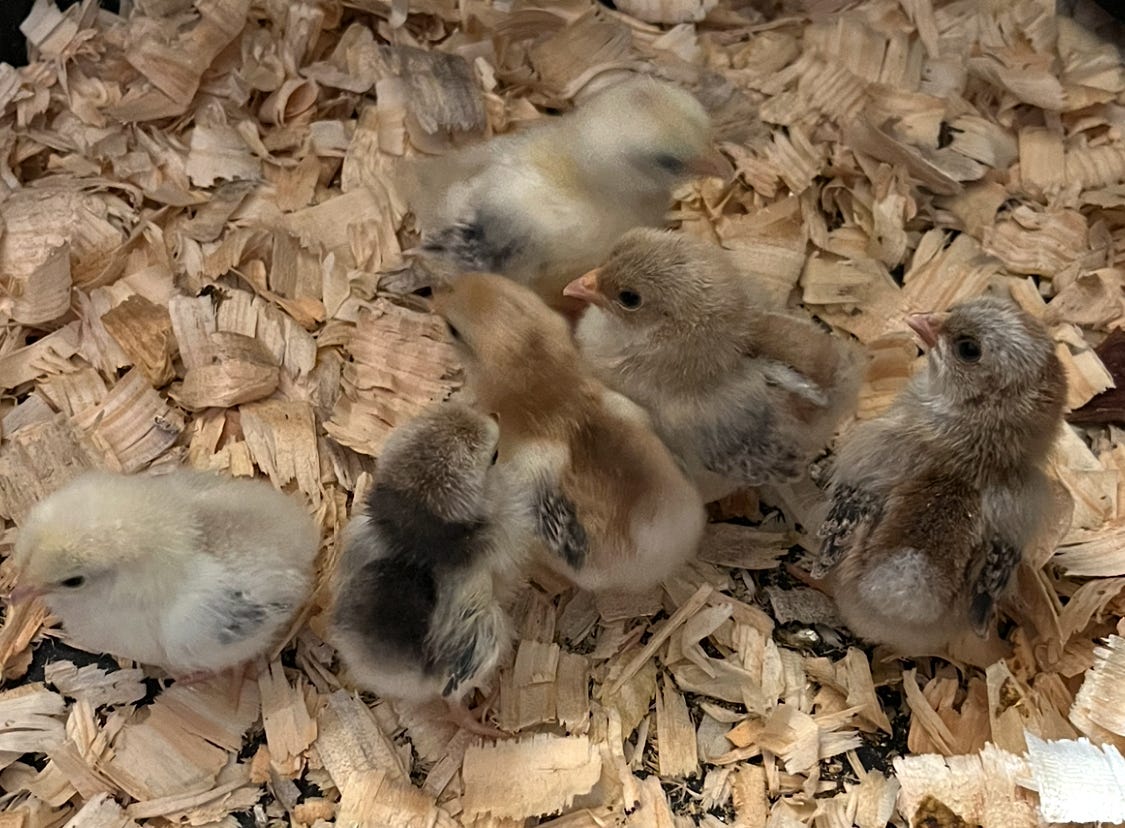
The chicks were tiny and adorable, so of course were handled frequently while growing in the indoor brooder.


I documented their progress and colors carefully, naming them after small soccer clubs in our family tradition. As time went by and I asked people familiar with chickens and Seramas…I realized all six were roosters! So I began planning the next hatch from the same breeder and rehomed 4 of the roos, keeping a whitish color roo (Zaragoza) and a darker chick with big eyes that ‘could’ be a hen (Bari).
The second batch of eggs had been collected during an ice storm, which could have affected their fertility, but I was willing to try anyway. About half of those 24 started developing, but unfortunately none of them survived to even attempt hatching. I sent the eggs to my local high school Anatomy & Physiology students to do eggtopsies and attempt to determine what had gone wrong (none of the chicks were deformed and all were very advanced when they died, so my incubator isn’t to blame).
Phase Two of project Serama then was to find several hens for my two handsome roos. My goal was to find four hens to keep with the two roos in an enclosed coop with everything they needed and occasional time out in a tractor during sunny weather or coop clean-out. My husband designed and built an amazing chicken castle for smøl (small) chickens, fully predator proof, that we refer to as the ‘Smøldorf Astoria’. I found a breeder selling months old, sexed Serama hens and am very pleased to have a separate bloodline from my roosters’ line to prevent inbreeding. We named them Patricia, Gabriela, Sofia and Nicol.


I lost track of which two hens were a month older, which didn’t end up mattering because within a week of getting the ladies I had an egg! I would get an itty bitty egg every other day and figured out because of her egg song and nesting behavior that it was Patricia’s. I contacted the breeder and she said yes, the hens had been part of a flock with roosters, so the eggs could be fertilized. I tried incubating seven of them (I didn’t want them to be much older than a week to increase hatchability and my roos were not mature enough yet to fertilize eggs), but none of them developed. Pretty quickly after setting up the coop with some nest ‘boxes’ - Serama size - filled with comfy straw, Patricia decided she wanted to brood. Her personality changed to spending most of the time fluffed up inside the nest and making weird sounds that made me think she had a respiratory illness if I hadn’t seen her in the nest all the time. When we had another cold snap (Seramas are not very cold tolerant, which is fine for our Texas average weather), I moved the chickens to a brooder box inside the house at night. Patricia was transported inside the nest, growling the entire way, to her own kennel next to the brooder box where she could hear her friends but not be bothered. When another hen began laying (Nicol? Gabriela? I’m still not sure who, or maybe both), they decided that Patricia’s nest was the only place for eggs, even with her in it! That led to some funny scenes and the need for me to sneak and candle eggs whenever Patricia happens to get off the nest for a bit to stretch her legs and get a bite to eat (fresh mealworms usually draw her off the nest and reward her efforts).
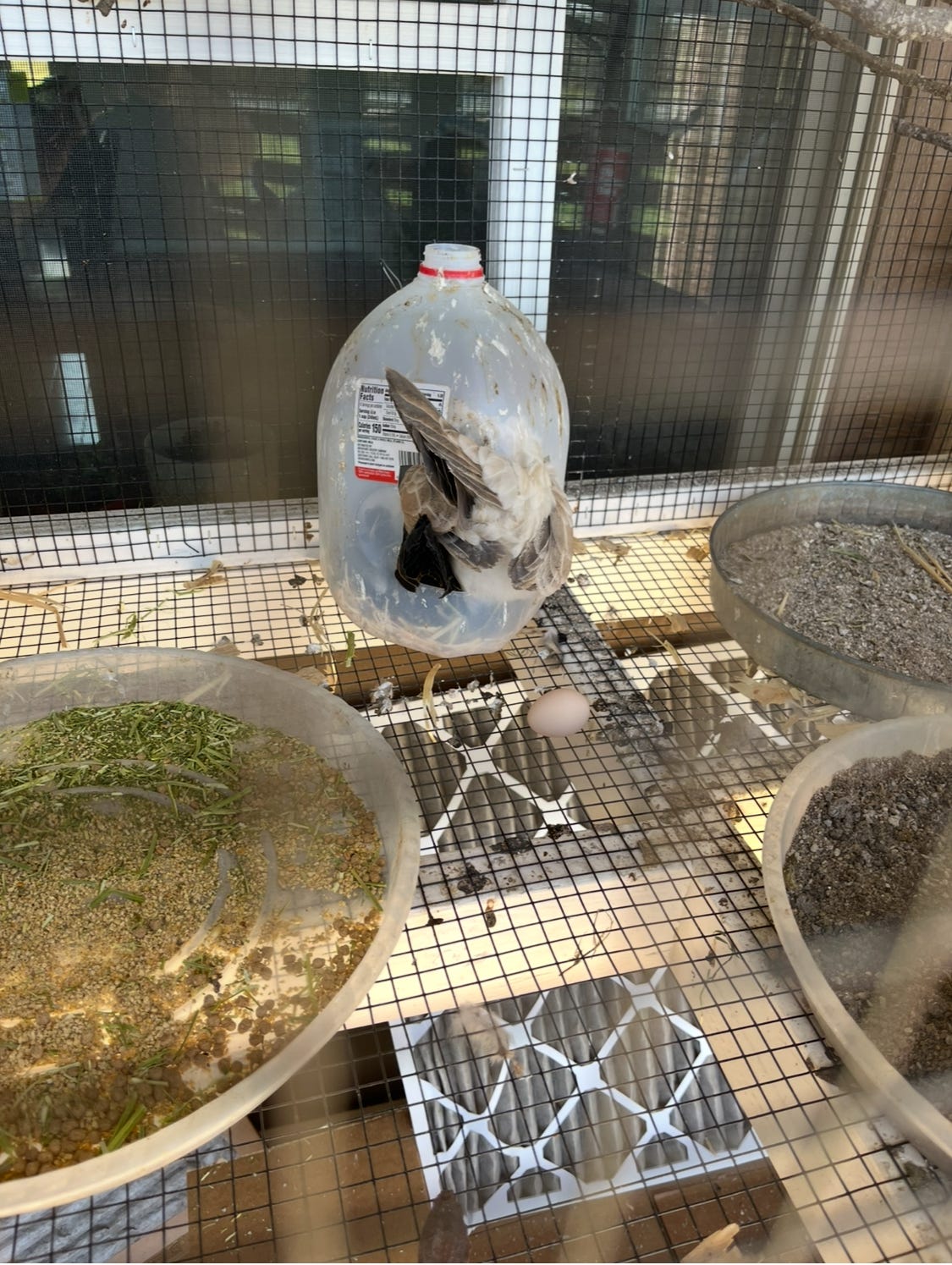
At four/five months old, the roosters have apparently matured enough to begin roosterly activities, but I haven’t seen fertilized eggs yet. I’m excited to see if a broody hen can hatch chicks with more success than the incubator.
Because of their small size, all of the Seramas are easily caught and regularly handled. I move them in pairs by hand to and from their tractor and even though they are predator aware, they aren’t flighty or wiggly. The roosters alarm to anything that flies overhead (sounds like a clogged garbage disposal) and a sound specific to when they see our cat Isa walk by. Isa likes to nap on top of the coop, falling asleep while watching the birds do their birdy things, but if she jumps or runs, the chickens alarm and freeze while watching her carefully.
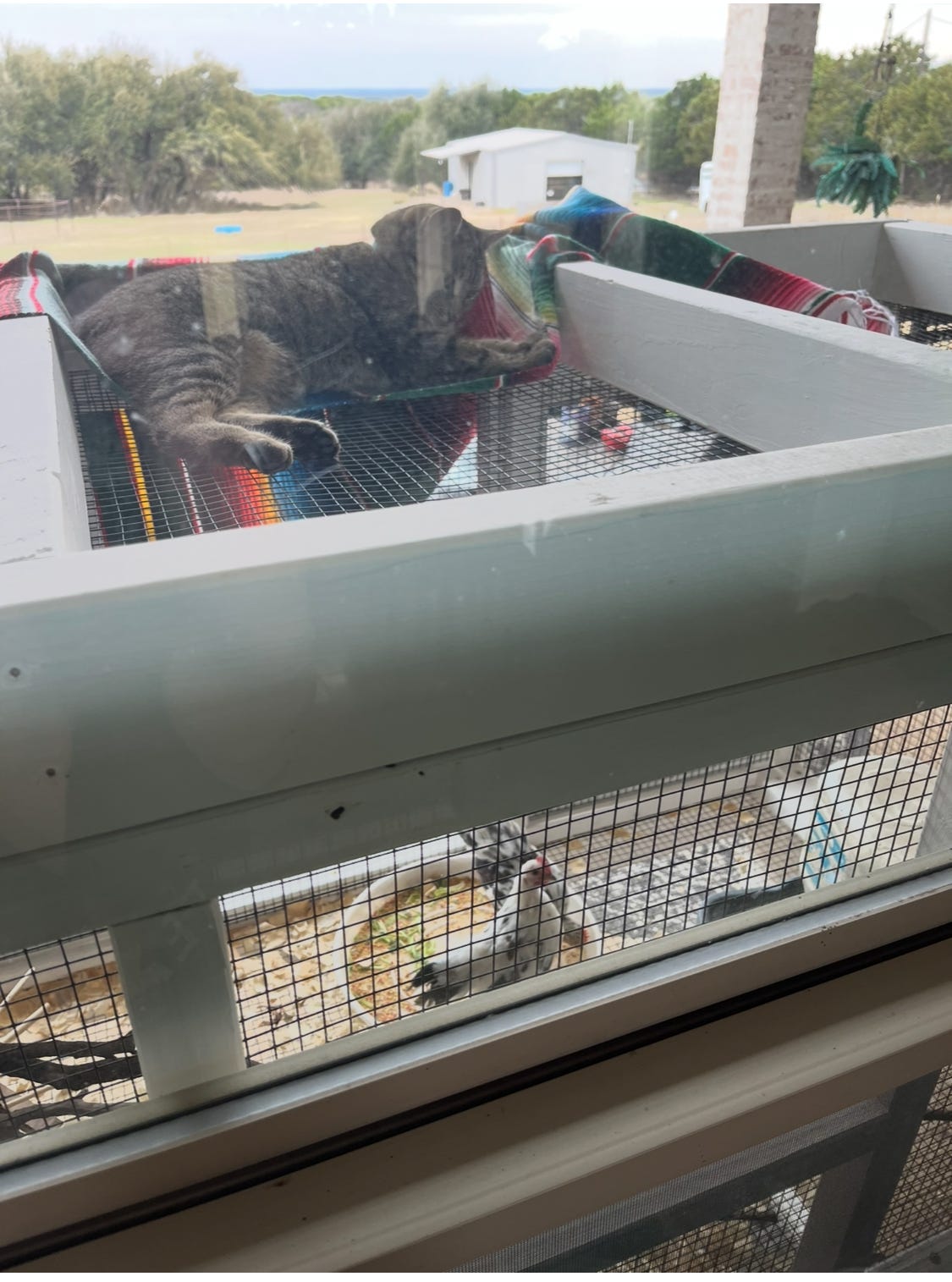
Bari is top rooster and very confident: he inspects everything I put into the coop, calls the girls over for tasty food, dances to impress me and has even given me a few pecks if I’m paying attention to someone else. This would probably be annoying and dangerous in a regular sized rooster, but in this guy it’s just cute. Sofia is tame to a strange degree, I originally thought she might be eggbound or sick, but after holding her and treating her with calcium drops…she just likes to be held. She normally hides under the hanging waterer to get away from pesky roosters and overbearing hens, but comes right up to the door every time a person is near. I look forward to spending a lot of time just hanging out and cuddling with her!
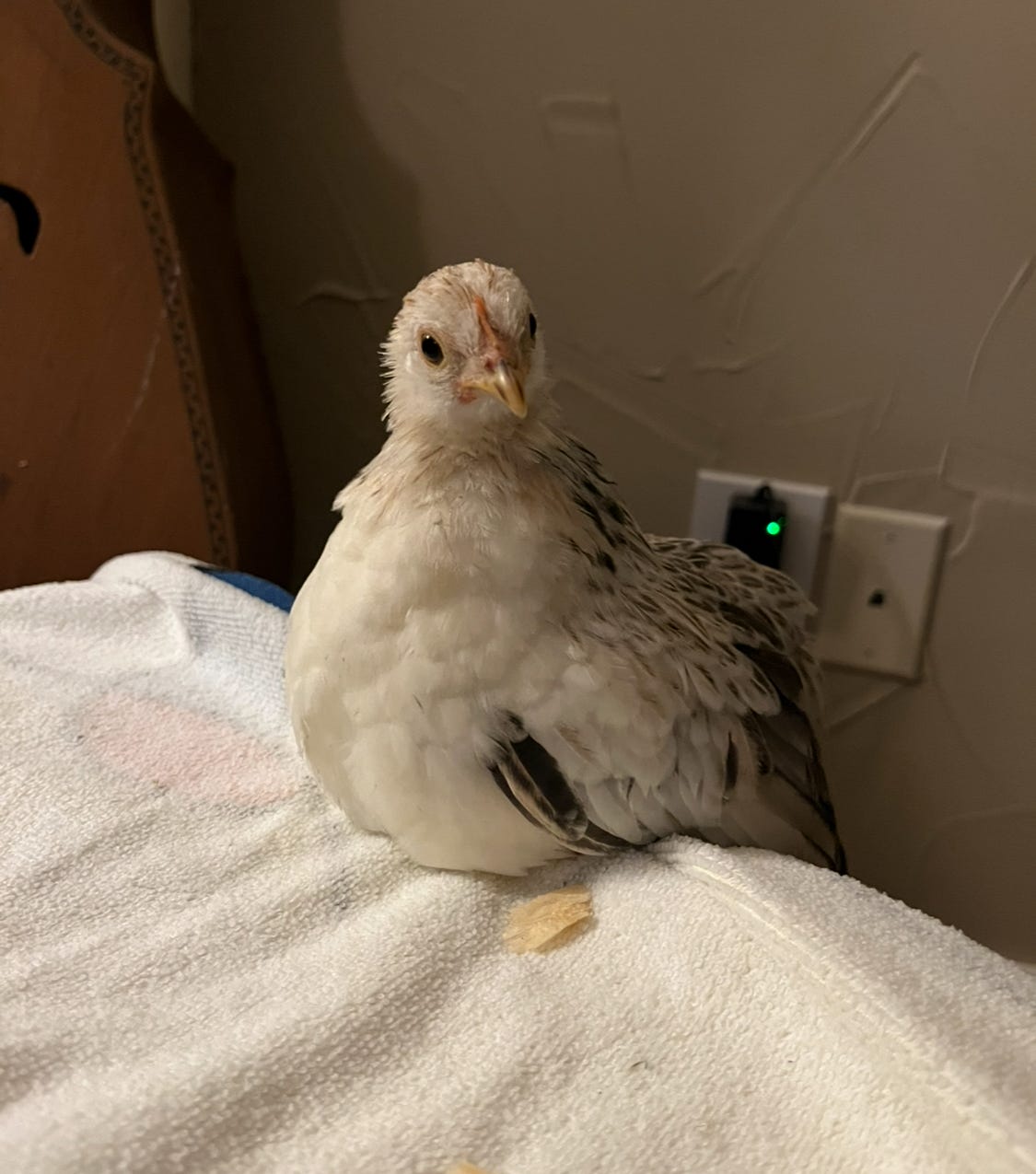
Seramas are nowhere as noisy as other chickens or birds. The roosters have learned to perfect their crow over several weeks (quite entertaining as they try and learn to crow). Bari will wake up and start crowing as soon as he sees a light inside the house come on regardless of if the sun’s out or not, and will crow throughout the day. Zaragoza despite evidence of being a rooster earlier than Bari is not top roo and is still working on his crow when he can get a crow in edgewise.


The hens will sing their egg song around the time they need to lay, an indicator that I need to go check and see where the egg is since the not-Patricia nest is detestable for some reason. Eggs end up on the floor of the coop or in the dust bath instead of the perfectly fine nest with clean straw, of course.
The coop has everything they need inside since I can’t safely free range the Seramas. The perches are natural oak branches wired to the roof so they don’t fall. The wires cause the perches to have a bit of swing to them, which the chickens adjusted to quickly and it mimics the swaying branches their wild cousins sleep in. Their waterer hangs at a height they can easily drink from but keeps the water cleaner from tidbits getting into it. It’s hung in an area away from sleeping perches so it doesn’t get coated in poop every night. It took me a few tries to figure out the coop floor: shavings blew away in the wind and so weren’t effective, cardboard was a solid, reused material but their feet kept getting dirty with poop stuck to it, so I eventually settled on leaving the mesh floor open and most of the poop falls through. Their food and dust bath are in plant pot trays and that keeps it contained unless scratched and spread, which also falls through the floor. I use a cat litter scoop to sift through the dust bath and scrape any poops off the coop whenever needed. My husband designed the coop mesh edges to be inside the frame and the doors are lined and closed with locked latches. The whole coop sits on our back porch so I am confident that it’s predator-proof. A nice last touch for the coop was to add a retractable awning to the front, so if the morning sun is too intense, it can be pulled down to keep the chickens comfortable. When the day warmed up quickly for springtime, I emptied a dust bath tray and added water, rose petals and some live mealworms. Though wary at first, the chickens quickly enjoyed standing or walking in the water to cool off their feet and pick through the floating plants and bugs.
Finding a diet that worked for the Seramas was a bit trickier, since their very small size means their food morsels need to be quite small. My other birds eat pellets and scratch only, since crumbles and powder create too much waste for adult birds. Seramas tolerate high protein feed well, so I base their diet off of a Multi-Flock 22% protein crumble I use to start feeding my hatchlings. They also get a mix of dove birdseed, Zupreem Fruitblend budgie pellets and a small handful of chopped alfalfa. I bought a bag of Purina Layena pearls, but even the small pearls seem to be too big for the Seramas. When I change out the chicken’s food, my free-ranging flock gets the leftovers, so not a calorie is wasted! Their dust bath includes bagged sand, wood ash from our firepit and chick grit (pebbles plus probiotics). They are free to bathe in this mix and eat any bits they might find appealing. The ash keeps them free of parasites and occasionally eating bits of charcoal can be good for their digestion as well, even if it leads to some weird grayish poops.
A big concern I had with four hens was calcium supplementation for strong eggshells and their health. My flock prefers Flaked oyster shell over the pebble type for chickens and checking the pebbles in the store, they still looked too big for my Seramas. So I came up with a system that saved eggshells (duck, turkey) from my flock that we use for eating, baked at 350 degrees for 12 minutes, cooled then crushed very well. The eggshells need to be baked to kill contaminants as well as not to train your birds to eat eggs. That is a very bad habit that is difficult to break chickens of once it gets started. The crushed shells get added to the dust bath, which saves on space in the coop and allows them some entertainment or enrichment by having to scratch and pick through the dust to eat it. Whenever I can, I will pick some (safe) greens from our yard for them to eat: sourgrass and dandelions are by far favorites, along with chicory, grass and henbit. Fresh plants like this are chock full of phytonutrients, vitamins, calcium and of course, fiber. The chickens also occasionally get live mealworms from my worm farm, bedding included (wheat bran and oats) that is all edible and enjoyable to the birds. They will also get small leftovers from the kitchen - shredded cheese is a favorite - so overall, I feel good that they get a varied diet that covers all the bases. I dewormed them when I first brought them home and sprayed for lice/mites, but since they don’t free range or have access to my other birds, it’s not a concern for me to continue that unless I sense a problem or illness.
Would I recommend Seramas? Absolutely. They aren’t going to be a homesteading staple, but for chicken enthusiasts or small living spaces, cuddly pets or ornamental purposes, they are perfect.
Footnotes / Resources: